
🪄 Everything that changed in design in the last 90 days.
It’s AI but let’s make it anti-FOMO.

Knock knock. Who’s there? Q2 2026!! 😮
So many things happened in AI, design, and tech in the first 90 days of 2026. If seeing all these updates makes you feel anxious, same here.
So I put together today’s breakdown of what actually matters. This is for you if you didn’t want to keep up with everything through the news, just to protect your nervous system.
My goal is that after reading this, you feel informed and maybe even a little motivated, not overwhelmed or panicked.
Vibe design is now an alternative / addition to the traditional design process.
Vibe coding is when you describe what you want to build with an AI tool, then the AI tool codes the product for you. And then you iterate another 1,000 times to make the product right.
Vibe design is the same, but for design. The term “vibe design” is still not used as much as “vibe coding” yet. So a lot of people still use “vibe coding” to describe this design workflow, despite the intention is to generate a working prototype, not a codebase that can be brought to the actual product. Well, on second thought, many designers are also shipping code, so the line is really blurry.
Vibe coding is not new. In 2025, there were already tons of products out there: Cursor, Bolt, Replit, Lovable, Claude... Collins Dictionary even named Vibe Coding Word of the Year.
But vibe coding were mostly a trend for engineers, not designers. But in 2026, the shift is clear. Designers are starting to vibe code, whether it’s from curiosity or FOMO.
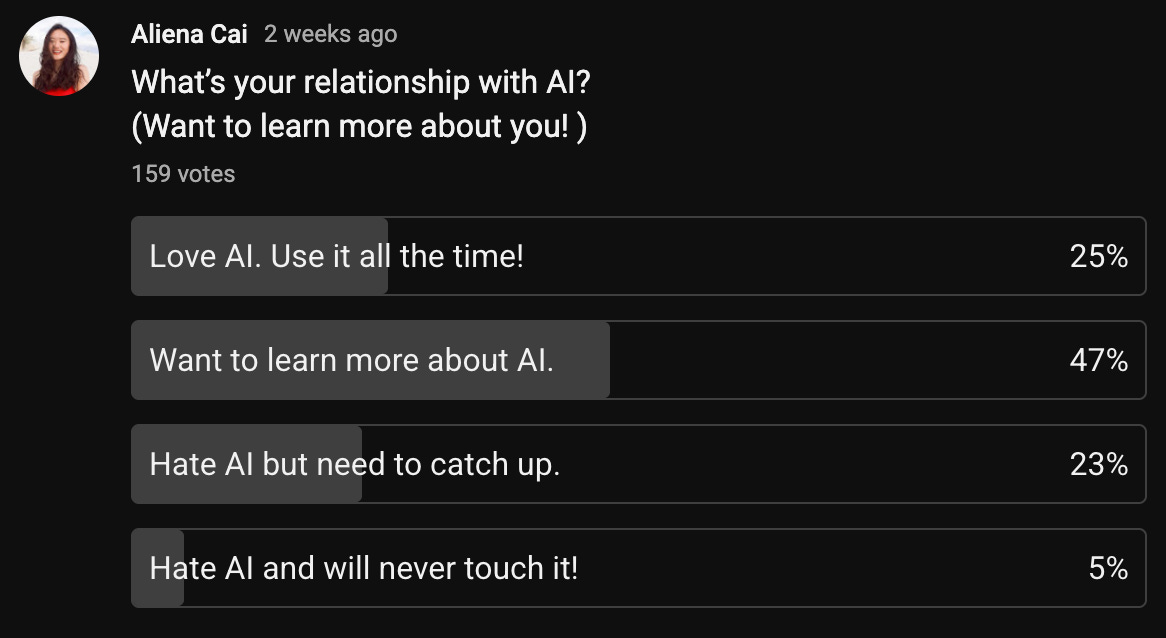
Interesting survey result on my audience attitude on AI
Early Q1 started with vibe coding tools getting smarter.
Lovable introduced Plan Mode in February 2026. Before generating anything, it shows you exactly what it plans to build. You review it, adjust it, and approve it. The same month, Lovable Cloud launched with a built-in backend, authentication, and real-time collaboration for up to 20 users.
Cursor and Windsurf became more accessible to non-engineers this quarter. Cursor rolled out Plan Mode in January. Windsurf at $15 a month continued to be described as the more approachable option without sacrificing depth. More designers started using both tools to prototype against real interfaces and visually verify output in the browser, not just review static mockups.
Replit pushed further into autonomous building. You describe what you want, and it handles setup, dependencies, and deployment.
At the same time, tools like v0 continued raising the bar for UI quality. If you care about production-level front-end output, it is still one of the strongest options. I haven’t tried v0 yet though my uni friend’s 1 year startup just got acquired by it. I think Claude is doing great on UI now!
And outside the developer tools, Adobe and Canva kept bringing AI into everyday design workflows. Adobe removed the credit cap on Firefly, made it multi-model, and added a conversational assistant directly inside Photoshop. Canva rebuilt its entire platform, made Affinity free, and shipped a design AI trained specifically to understand layout.
Then Google entered the room. March 18, 2026.
Google launched Stitch, a free AI-native design canvas built entirely around prompting. You describe what you want and it generates multiple screens at once. You can speak to it directly through Voice Canvas. You can drop in any URL and it extracts a design system from it automatically. And it introduced something called DESIGN.md, an instruction file you write once that controls the tone, style, and constraints for every future generation.
It is free now. And it is clearly aimed at the same designers Figma has been building for since 2016.
Figma’s stock dropped four percent the week Stitch launched 📉
My thoughts on its potential? Great potential.
My thoughts on its current quality? Not there yet.
Then Figma responded. March 24, 2026.
Six days after Stitch, Figma shipped AI agents directly inside the canvas. It’s an agent that works inside your actual file, building components, applying your design system, and following your team’s conventions. They introduced a layer called Skills, simple markdown instruction files that tell the agent how your team works. No code required to write them.
Notice that both Google and Figma shipped an instruction file concept in the same week? DESIGN.md and Skills are the same idea from two competing platforms. When two giants independently arrive at the same solution in the same quarter, that is not a trend. That is a direction.
And from all of this, a new role is emerging – the design engineer.
Someone who moves between Figma and the codebase without losing fluency in either. They own the component library. They prototype in code when it is faster than Figma. They review pull requests for interaction accuracy. They are the reason “design handoff” stops being a painful phrase.
Most companies are not formally hiring for this role yet. But the demand is already there especially in the startup world. Similar to what I talked about even before 2026, more designer roles are likely to shift toward a general “product role” especially if you’re working for a startup.
However. The noise online is much louder than what I am actually seeing in real life.
Online, it looks like every designer has dropped Figma, picked up Claude or Cursor, and is now shipping full apps from their bedroom. “I built this in 1 hour” energy is strong.
But how much of this is just content designed to make us FOMO? 🥹
In real life, it’s more nuanced. Yes, designers are vibe coding. But mostly on the side. Startup ideas, freelance work, quick prototypes before pitching.
In larger companies, even big tech, these tools are not part of the core workflow yet. And that makes sense. Design systems, review cycles, and engineering processes took years to build. They do not get replaced because a tool dropped in January. Change at that scale is slow. Sometimes painfully slow.
That said, these tools are creeping in. Side projects, internal experiments, early-stage exploration. Not official, but not ignored either.
What’s more interesting is what companies are doing at a higher level. Companies like Google are making AI usage part of organizational goals. That is a real shift.
But that is very different from “everyone is vibe designing production products now.” The truth is somewhere in the middle. Which, unfortunately, is less viral but more real.
Don’t confuse the means with the mission.
Vibe coding (or vibe design) helps you move faster. But vibe coding is not the goal. Building the right product is. When you mix those up, you just get to the wrong answer faster.
I don’t think vibe design is “replacing” the traditional design process. The outputs are still inconsistent. The tools make it dangerously easy to skip the problem space and jump straight to a solution that looks finished. And because these outputs are interactive, people are falling in love with the wrong ideas faster than ever before.
If you use these tools with the right mindset, they amplify your thinking.
If you use them with the wrong mindset, they amplify your impatience and greed.
The designers who will thrive are not the ones who use AI the most. They are the ones who use AI to amplify the right thinking.
How to learn more about AIUX ✨
If you are in between jobs and your goal is to land a better paid design role in tech, while filling gaps in your UI, UX, Product, and AI design skills, my program Fast Track UX is currently 15% off until April 5 with code Q2RESET2026. It is a Figma partner bootcamp, so you also get access to Figma Professional during the program.
If your goal right now is not job search but getting started with AI, here is a free tutorial to help you try vibe coding step by step: ▶️ How to design a website with AI (step-by-step tutorial)
And if you want a broader understanding of AIUX, I also have a video that breaks that down: ▶️ How I use (and not use) AI to design better in 2026
Enjoy!!
Your partner in success,
Aliena Cai